
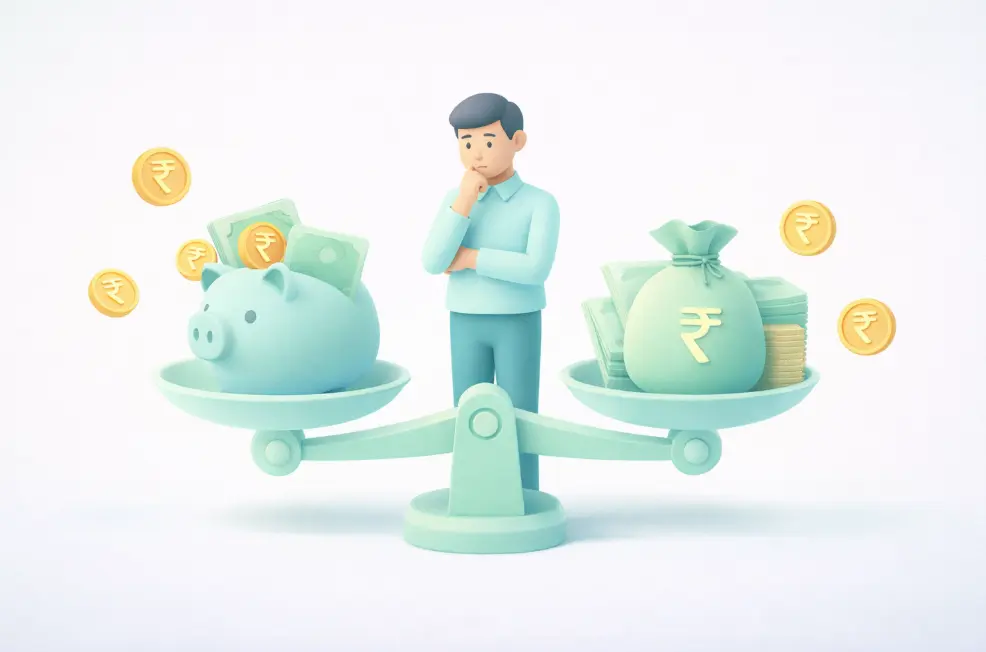
Borrowing has always been a slightly uncomfortable subject in Indian households. We talk around it, not through it. Salaries are hinted at, investments are vaguely mentioned, and anything involving debt is often skipped altogether. But things are changing, conversations around loans and money are becoming more open and practical. People are slowly moving away from secrecy and towards clarity.And that brings us to a more real, everyday question: what do you do when you actually need money? Do you dip into your savings, or do you take a loan? With options like instant personal loanapps now easily accessible, the decision has become quicker, but not necessarily simpler. On paper, it sounds like a simple choice. In reality, it rarely is.
Understanding What Savings Really Mean
Savings aren't just money sitting in your account. They represent time, discipline, and future plans. For many people, it is an emergency buffer. For others, it is tied to something bigger: a move, a course or a long-term goal. Which is why using savings isn't always a neutral decision. Because once they're used, rebuilding them takes effort. And depending on the situation, that gap can stay longer than expected.
But there are situations where relying on savings simply makes sense. If the expense is small, immediate, and doesn't disturb your financial stability, using what you already have avoids any future obligation. No interest, repayment pressure or added mental load. In moments like these, instead of searching for options like 'small loans online', using your own funds can often be the simpler choice.
It also works well when you have a clear cushion left even after spending. In that case, you're not really compromising anything; you're just using money for what it was meant for.
Where Loans Start Making More Sense?
There are some unexpected moments where using savings feels slightly off. Maybe the amount is larger than expected, maybe using your savings would leave you with almost nothing for emergencies, or maybe your money is tied up in investments that you don't want to disturb right now.
This is where options like an online personal loan or even an instant credit line start to make more sense. Instead of pulling out a large amount at once, an instant credit line gives you the flexibility to access funds as and when you actually need them. Instead of draining your reserves, you spread the cost over time. It gives you room to manage the situation without completely resetting your financial position. In some cases, that flexibility matters more than avoiding interest.
Looking Beyond Interest: What Actually Matters?
Most comparisons between savings and loans begin and end with one thing, and that is interest. It feels like the most obvious factor, so naturally, it gets the most attention. But that's only one part of the picture. Even when options like an instant personal loan are easily available, the decision isn't just about avoiding interest. Using your savings comes with its own quiet cost. It might mean breaking an investment earlier than planned, missing out on potential returns, or simply leaving yourself without a safety net when something unexpected shows up.
That impact doesn't always feel immediate, but it lingers. On the other hand, a loan makes its cost visible: repayments, interest, timelines, but in return, it helps you hold on to your liquidity. With tools like an urgent loan app, access to funds has become quicker, which can be helpful in time-sensitive situations, but it also makes it easier to overlook the long-term trade-offs if you're not careful.
Conclusion
In real life, financial decisions like these rarely sit at extremes. It's not always about choosing savings or taking a loan; it's often about finding a middle ground that doesn't put unnecessary pressure on either side. You might use a part of your savings to reduce the burden, and then rely on a loan or even an instant credit line to manage the rest more comfortably. This way, you're not draining your reserves, and you're not overcommitting yourself either. It's a quieter, more balanced approach, one that doesn't feel drastic but holds up better over time. You'll often see people searching for terms like small loans online when the requirement is immediate, but not necessarily large.
At the same time, the choice between savings and borrowing isn't about right or wrong: it's about timing, comfort, and context. There will be situations where using your own money feels simple and makes complete sense. And there will be moments where preserving your savings and turning to structured options, whether through an urgent loan app or a planned credit facility, works out better in the long run. With platforms like Capital Now, borrowing today feels far more transparent and manageable, shifting the focus from urgency to informed decision-making. In the end, it's not just about handling a financial need; it's about making sure that one decision doesn't quietly create a bigger problem later.
Frequently Asked Questions
Ready to Take Control of Your Finances?
Download the Capital Now app today and start your journey towards smarter financial decisions. With personalized loan recommendations, expert tips, and real-time credit score monitoring, managing your finances has never been easier.